Hotel and resort developers are rewriting their FF&E specification sheets for 2026. Guestrooms need to feel calmer and more residential, public areas need to work harder as revenue-generating social spaces, and procurement teams are under more pressure than ever to prove compliance, durability and supply-chain traceability before a single container ships. Working directly with hospitality groups across the GCC, Europe and North America, here is what we are seeing repeated on almost every tender that crosses our Kayseri design desk.
1. Modular, Fast-Turnaround Guestroom Casegoods
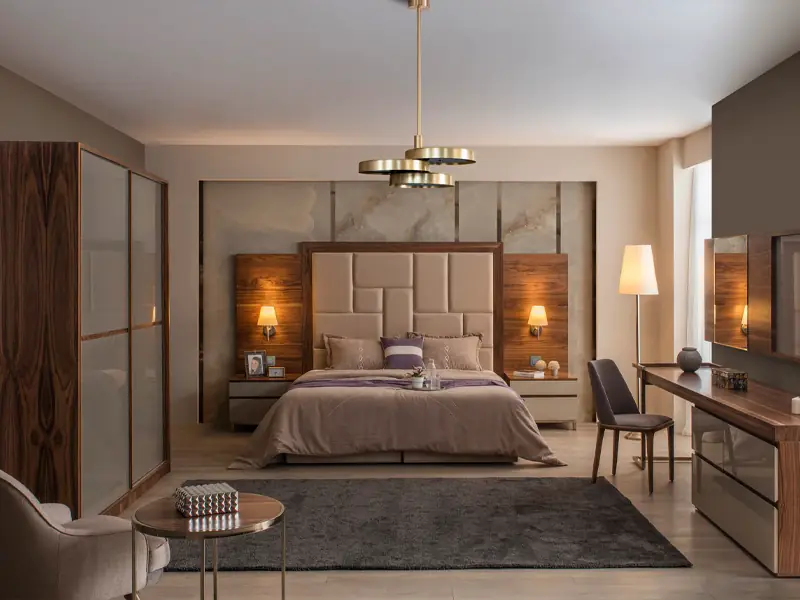
Renovation cycles are shortening. Instead of bespoke millwork with long lead times, operators are specifying modular headboards, nightstands and luggage benches that share a common fixing system across room types. This lets a 300-key property refresh in phases without shutting down entire floors, and lets a factory like ours pre-build components against a rolling schedule rather than a single mass production run.
For brands running multiple properties, modularity also means one CAD approval can be adapted to several room configurations — a meaningful saving in design and sampling time.
2. Fire-Rated Natural and Natural-Look Fabrics
Guests are asking for a warmer, less synthetic material palette — bouclé, textured linen-look weaves, and matte leathers — while compliance teams still require full certification to BS 5852/7177 or CAL 117 depending on the destination market. The trend for 2026 is inherently flame-retardant natural-fibre blends that pass certification without the "shiny contract fabric" look of a decade ago.
3. Lobby Furniture Designed for Dwell Time, Not Just Check-In
Lobbies are being reprogrammed as all-day social and co-working spaces. That means lounge seating with integrated power, modular sectionals that can be reconfigured for events, and lighter-weight pieces that housekeeping and events teams can move without a forklift. Expect more requests for seating rated for both public-area durability and residential-grade comfort in the same piece.
4. Roll-Packed, Container-Optimised Sleep Systems
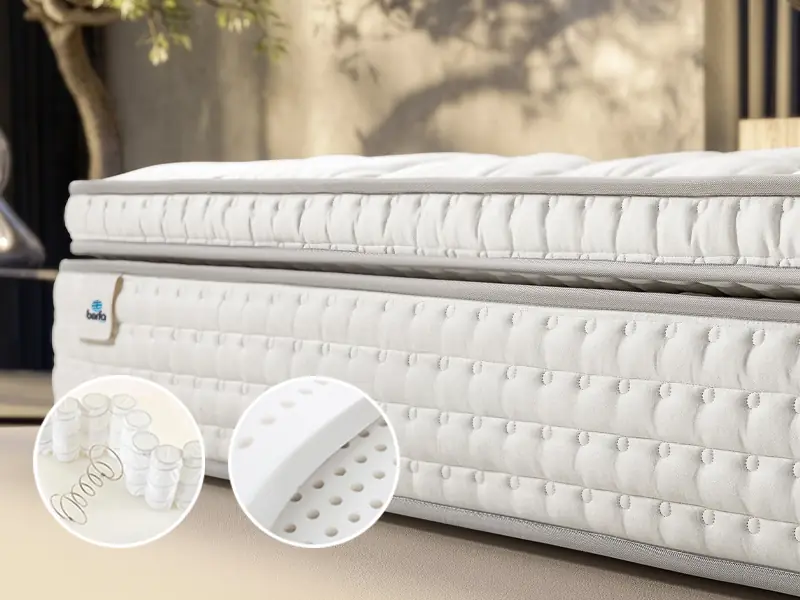
On the mattress side, operators renovating multiple properties in one campaign are prioritising roll-packed and vacuum-compressed mattresses that cut container volume by up to 70%. It is no longer just an e-commerce packaging trick — hotel groups doing a 500-room refit want the freight savings too.
5. Traceable, Factory-Direct Sourcing
Finally, procurement teams are asking harder questions about where furniture is actually made, not just where it is branded from. Vertically integrated manufacturers who produce their own frames, foams, springs and upholstery in one facility can answer material-origin and compliance questions in a single call — something a multi-layered trading company structure struggles to do quickly.
The properties getting the best pricing and the fastest lead times in 2026 are the ones specifying direct from the factory floor, not through three layers of intermediaries.
What This Means for Your Next FF&E Tender
If you are scoping a hotel, resort or serviced-apartment refurbishment for 2026, build these five trends into your specification early — modular casegoods, certified natural-look fabrics, dual-purpose lobby seating, roll-packed mattresses and a traceable, factory-direct supply chain will shape both your budget and your installation timeline.
Berfa Group's Kayseri facility manufactures guestroom FF&E, lobby seating and hotel-grade sleep systems under one roof, with in-house CAD, upholstery, spring and foam production. Send us your project brief and our export desk will return drawings and factory-direct pricing within one business day.